Pod systems and vape pens are two common designs in the vaping market. Both are generally more compact than traditional box-mod devices, but their construction, e-liquid capacity, coil arrangements and operating features can differ considerably.
At first glance, the two may look similar. Both typically have a rechargeable battery, a heating element and a section that holds e-liquid. However, the way these components are arranged can influence device size, maintenance requirements and overall operation.
Understanding these differences is useful when researching vaping technology or comparing different device designs. This guide examines pod systems and vape pens, including their construction, battery specifications, coil technology, maintenance requirements and key limitations.
What Is a Pod System?
A pod system is a compact vaping device that uses a removable cartridge, commonly called a pod, to hold e-liquid. The pod connects to a rechargeable battery and contains either an integrated coil or a replaceable heating element, depending on the model.
Most pod systems have a relatively simple design. Some operate automatically when the user inhales, while others include a firing button and adjustable settings.
Pod systems are generally available in two configurations:
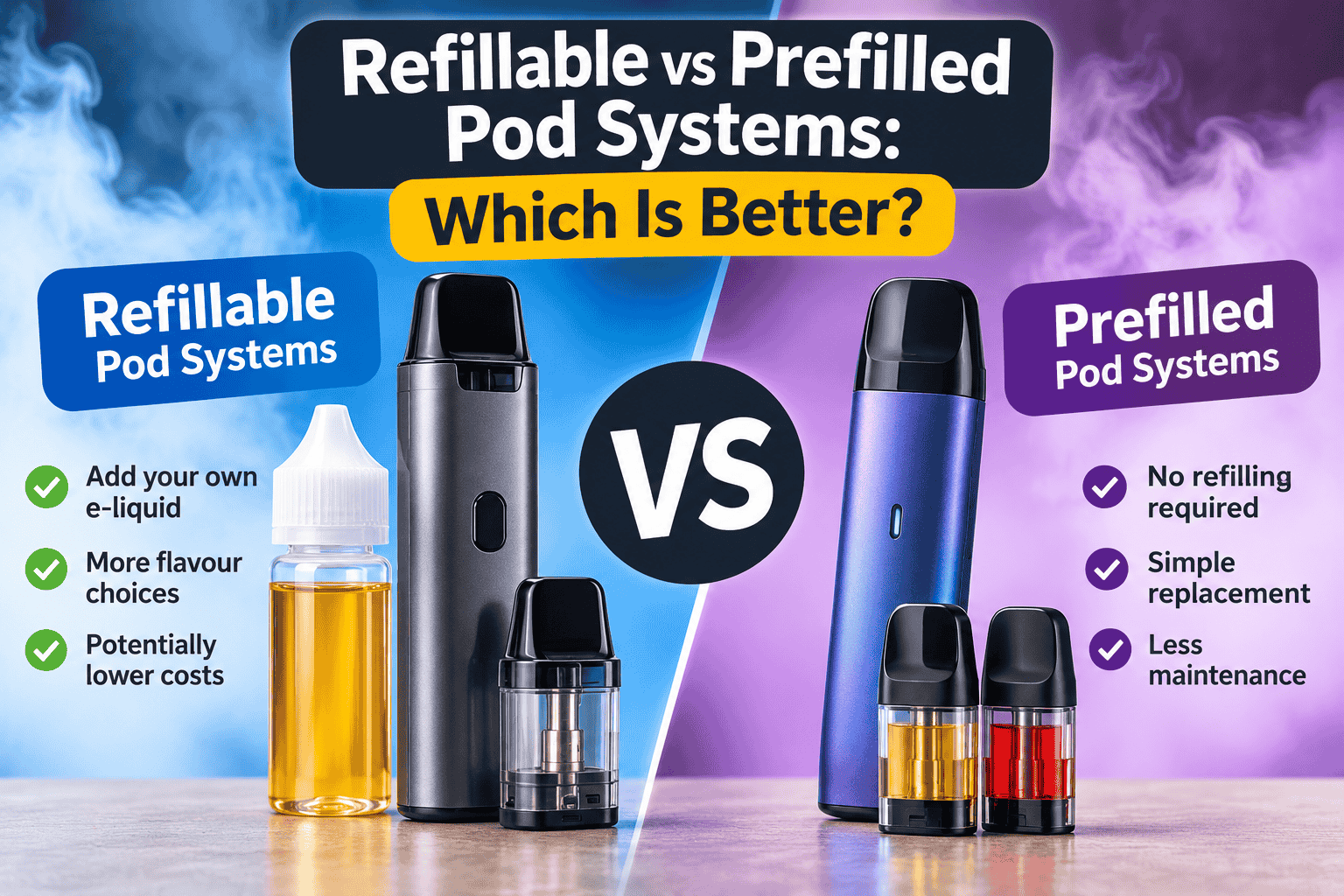
Open pod systems: These use refillable cartridges. The user adds compatible e-liquid through a designated filling port and replaces the pod or coil when necessary.
Closed pod systems: These use factory-filled cartridges. The cartridge is replaced when its contents are depleted, rather than being routinely refilled.
The compact design is one of the defining characteristics of pod systems. Many models have a slim rectangular or rounded body, with the cartridge sitting directly on top of the battery.
Pod systems can also differ in coil resistance, airflow arrangements, battery capacity and available power settings.
What Is a Vape Pen?
A vape pen is a vaping device with an elongated, cylindrical or pen-shaped body. Its design is usually based on a rechargeable battery connected to a tank or cartridge that holds e-liquid.
Unlike the typical compact pod system, traditional vape pens often use a separate tank with a replaceable coil.
The main components include:
- Battery: Provides electrical power to the heating element.
- Tank or cartridge: Stores the e-liquid.
- Coil: Heats the e-liquid to produce an aerosol.
- Mouthpiece: The section through which the aerosol is inhaled.
- Airflow system: Controls the movement of air through the device.
Some vape pens have fixed power output, while others include adjustable voltage or wattage settings.
Vape pens are available in different sizes and configurations. Traditional models often have a larger tank and battery than basic pod devices, although this is not true of every product.
The term also covers a range of newer designs, so specifications should always be checked against the individual manufacturer’s documentation.
Pod Systems vs Vape Pens: Key Differences
Although both devices use similar underlying technology, their construction and operating arrangements are different.
| Feature | Pod Systems | Vape Pens |
|---|---|---|
| Design | Compact, often rectangular or rounded | Usually cylindrical |
| E-liquid storage | Removable pod | Tank or cartridge |
| Coil arrangement | Integrated or replaceable | Commonly replaceable |
| Battery | Rechargeable | Rechargeable |
| Size | Often smaller | Often longer |
| Refilling | Depends on pod type | Depends on tank design |
| Airflow | Fixed or adjustable | Fixed or adjustable |
| Power settings | Fixed or adjustable | Fixed or adjustable |
| Maintenance | Depends on pod construction | Depends on tank and coil design |
| E-liquid compatibility | Device-specific requirements | Tank and coil-specific requirements |
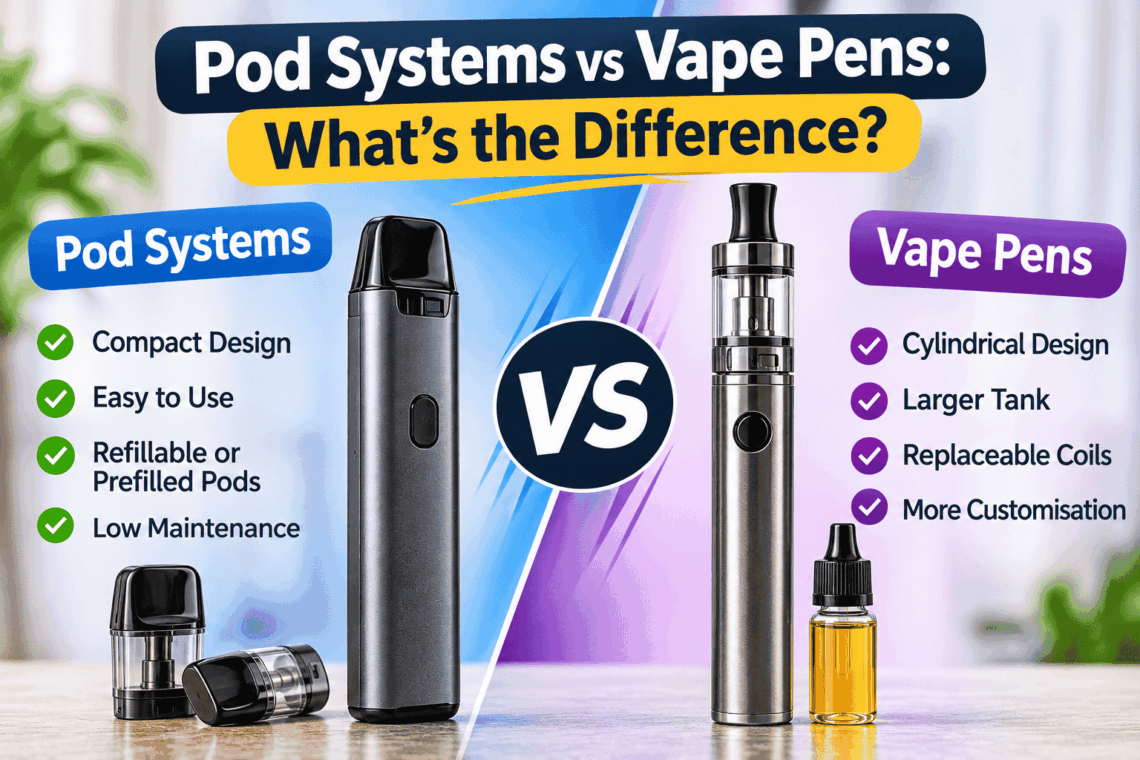
The most noticeable difference is the physical design. Pod systems use compact cartridges, whereas traditional vape pens generally have a separate tank assembly.
However, there is considerable overlap between modern devices, making individual specifications more important than product labels alone.
1. Design and Construction
Design is one of the easiest ways to distinguish a pod system from a traditional vape pen.
Pod systems
Pod systems are designed around a compact battery and removable cartridge. The pod usually attaches directly to the device using magnets, clips or another connection mechanism.
This arrangement reduces the number of separate components and creates a relatively small overall device.
Many pod systems also have minimal external controls. Basic models may use automatic draw activation, while more advanced versions include buttons, screens and adjustment settings.
Vape pens
Traditional vape pens usually have a cylindrical body with a tank connected to the top.
The battery section and tank are separate components, which makes the overall design different from most pod systems.
Some models have removable tanks, allowing users to access the coil and other replaceable components without replacing the entire tank.
Key difference: Pod systems generally use a more integrated cartridge design, while traditional vape pens commonly have a separate tank and battery arrangement.
2. Battery Capacity and Charging
Battery capacity is an important specification when comparing vaping devices.
It is usually measured in milliampere-hours (mAh), which indicates the battery’s electrical charge capacity.
Both pod systems and vape pens use rechargeable batteries, but their capacities vary between models.
Battery capacity in pod systems
Many compact pod systems use relatively small batteries to maintain their lightweight design.
Some models include USB-C charging, while others may have different charging arrangements depending on their age and specifications.
Battery capacity in vape pens
Traditional vape pens can have larger battery housings, although compact models are also available.
Their battery capacity depends on the device’s physical dimensions, internal battery design and intended power output.
A larger battery does not automatically guarantee longer operating time. Power consumption, coil resistance, output settings and frequency of use also affect battery performance.
Key difference: Neither device type automatically has better battery life. Comparing the actual mAh rating and power requirements provides a more reliable assessment.
3. E-Liquid Capacity and Refilling
Another difference concerns how each device stores e-liquid.
Pod systems
Pod systems use removable cartridges that hold e-liquid. Their capacity varies according to the product and applicable market regulations.
Open pod systems allow manual refilling, while closed systems use factory-filled cartridges.
The pod’s design determines how it is filled and whether the coil can be replaced separately.
Vape pens
Vape pens generally use tanks or cartridges to hold e-liquid.
Traditional refillable tanks have designated filling ports, allowing users to add compatible e-liquid without replacing the entire tank.
Tank capacity varies considerably between models and is subject to applicable regulations.
Key difference: Pod systems use dedicated cartridges, whereas traditional vape pens commonly use separate tanks. Both can be refillable, depending on their design.
4. Coil Technology
The coil is an essential component in both device categories. It heats the e-liquid to produce an aerosol.
However, the way coils are installed and replaced can differ.
Pod system coils
Some pod systems have integrated coils. In these designs, the coil is permanently installed inside the cartridge.
When the coil reaches the end of its useful life, the complete pod is replaced.
Other pod systems use replaceable coils, allowing the user to retain the cartridge while changing the heating element.
Mesh coils are also used in some pod systems. Their heating surface is designed differently from traditional wire coils.
Vape pen coils
Many traditional vape pens use replaceable coil heads installed inside the tank.
The user can remove the old coil and install a compatible replacement while keeping the tank.
Coils are available in different resistance ratings and construction styles.
The manufacturer’s recommended operating range should always be followed.
Key difference: Integrated pod coils require cartridge replacement, while replaceable-coil designs allow the heating element to be changed separately. Both arrangements are found across different device categories.
5. Airflow and Vapour Production
Airflow influences how air moves through a vaping device and contributes to its overall operating characteristics.
Both pod systems and vape pens can have fixed or adjustable airflow.
Some compact pod systems use a relatively restricted airflow arrangement. Other models include adjustable airflow controls that allow changes to the amount of incoming air.
Traditional vape pens may use adjustable airflow rings built into the tank.
Coil resistance, power output, airflow and e-liquid composition all influence aerosol production.
It is therefore inaccurate to assume that every vape pen produces more aerosol than every pod system.
Individual specifications provide a better basis for comparison.
6. Maintenance and Cleaning
Maintenance requirements depend largely on the device’s construction.
Pod system maintenance
Pod systems with integrated coils generally have fewer separate components to maintain.
However, refillable versions still require attention to:
- Filling ports and seals.
- Pod connections.
- E-liquid residue.
- Cracks or damaged cartridges.
- Battery contact points.
If the cartridge develops persistent leakage or visible damage, it should be replaced according to manufacturer guidance.
Vape pen maintenance
Traditional vape pens may require additional attention because of their separate tank and coil arrangements.
Maintenance can include:
- Checking tank seals.
- Cleaning the tank according to manufacturer instructions.
- Replacing worn coils.
- Checking the battery connection.
- Inspecting the mouthpiece.
- Looking for signs of leakage.
A device should not be disassembled beyond the manufacturer’s recommended procedure.
Key difference: Some pod systems have fewer components to maintain, while traditional tank-based vape pens may involve additional cleaning and coil replacement.
7. E-Liquid Compatibility
E-liquid compatibility is another important consideration.
Different devices are designed to operate with particular e-liquid formulations.
Factors such as viscosity, coil resistance, wicking material and power output influence compatibility.
Pod systems can have specific requirements because their smaller cartridges and coil arrangements may be designed for particular liquid formulations.
Vape pen tanks also have compatibility requirements. A liquid that is unsuitable for a particular coil can contribute to poor wicking or leakage.
Users should always consult the manufacturer’s recommendations instead of assuming that one e-liquid works with every device.
8. Cost and Replacement Components
The total cost of owning a vaping device involves more than its initial purchase price.
Both pod systems and vape pens have ongoing replacement requirements.
Pod systems
Depending on the design, replacement expenses may include:
- Complete pods.
- Replacement coils.
- E-liquid.
- Other manufacturer-specific components.
For closed pod systems, users generally need to purchase compatible prefilled cartridges.
Vape pens
Replacement expenses can include:
- Coil heads.
- E-liquid.
- Tank components.
- Replacement seals or accessories.
Actual costs vary between manufacturers and models.
A meaningful comparison should consider the initial device price, replacement component availability and ongoing maintenance expenses over the same period.
9. Device Lifespan and Replacement Availability
Device lifespan depends on battery condition, construction quality, maintenance and component availability.
Both pod systems and vape pens contain rechargeable batteries that gradually lose capacity through repeated charging and use.
Other components, such as pods, tanks, coils and seals, have their own replacement requirements.
Availability is particularly important for devices with proprietary cartridges or unusual coil configurations.
Before evaluating a particular model, check whether compatible replacement parts are still available from legitimate suppliers.
A device with limited replacement options may become difficult to maintain even if its original specifications are suitable.
Advantages and Disadvantages of Pod Systems
Main characteristics
- Compact and integrated construction.
- Removable cartridge design.
- Available in refillable and prefilled formats.
- Some models offer adjustable airflow and power.
- Integrated-coil versions have fewer separate replacement components.
Limitations
- Some models have proprietary cartridge requirements.
- E-liquid capacity varies and may be restricted by regulations.
- Integrated-coil pods require complete cartridge replacement.
- Small device dimensions can limit battery capacity.
- Compatibility differs between product families.
Advantages and Disadvantages of Vape Pens
Main characteristics
- Traditional cylindrical construction.
- Many models use separate refillable tanks.
- Replaceable coil options are widely available.
- Some models provide adjustable airflow.
- Different battery and tank configurations are available.
Limitations
- Traditional designs can be longer than compact pod devices.
- Separate tanks may require additional cleaning.
- Replacement coils must match the tank.
- Tank seals and connections require inspection.
- Some models have limited adjustment options.
Frequently Asked Questions
Are pod systems and vape pens the same?
No. Both use rechargeable batteries and heating elements, but their construction differs. Pod systems use removable cartridges, while traditional vape pens generally use a separate tank connected to the battery.
Do pod systems have replaceable coils?
Some do. Certain pod systems have integrated coils, meaning the entire pod must be replaced. Others allow users to remove and replace the coil separately.
Do vape pens use refillable tanks?
Many traditional vape pens use refillable tanks, but this depends on the specific model. Some newer pen-shaped devices use cartridges instead.
Which has a larger battery: a pod system or a vape pen?
There is no universal answer. Battery capacity depends on the individual device. Some vape pens have larger batteries, while certain advanced pod systems offer comparable capacities.
Can the same e-liquid be used in both devices?
Not necessarily. E-liquid compatibility depends on the coil, resistance, wicking design and manufacturer’s recommendations. Always check the specifications before using a particular formulation.
Are all pod systems smaller than vape pens?
No. Many pod systems are compact, but some advanced models are relatively large. Similarly, certain vape pens are designed to be lightweight and portable.
Do pod systems require less maintenance?
Some pod systems require less maintenance, particularly those with integrated coils and prefilled cartridges. Refillable pod systems still need regular inspection and cleaning.
What is the main difference between a pod and a tank?
A pod is a cartridge designed specifically for a pod-based device. A tank is generally a separate e-liquid reservoir connected to a battery or device body. Their construction and connection mechanisms differ.
Final Thoughts
Pod systems and vape pens share the same basic operating principle, but their designs offer different approaches to storing e-liquid, replacing coils and maintaining the device.
Pod systems use compact cartridges and often combine several components into a single removable unit. Traditional vape pens generally use a separate tank and battery, with many models offering replaceable coil heads.
Neither category is automatically superior. Battery capacity, coil construction, e-liquid compatibility, replacement availability and maintenance requirements vary considerably between individual models.
For anyone researching vaping technology, the most useful approach is to compare the actual specifications rather than relying solely on whether a product is marketed as a pod system or vape pen.
This article is intended for adults of legal purchasing age. Nicotine is addictive. Vaping products are not risk-free and are not intended for non-smokers or young people.